Professional Archery Range Development Services In Chennai
TABLE OF CONTENTS
1. Introduction
2. Why Proper Archery Range Construction Matters
3. Types Of Archery Ranges
4. Essential Components Of An Archery Range
5. Archery Range Construction Process
6. Archery Range Safety And Layout Planning
7. Archery Range Construction Cost
8. Choosing Archery Range Builders
9. Maintenance Of An Archery Range
10. Conclusion
11. FAQs
Professional Archery Range Development Services In Chennai
𝐈𝐧𝐭𝐫𝐨𝐝𝐮𝐜𝐭𝐢𝐨𝐧
Archery requires a carefully planned environment where athletes can practise consistently and safely. Schools, sports academies, clubs, training centres, resorts, and dedicated sports facilities can develop archery ranges based on their available space and intended use.
An archery range construction company in Chennai can plan the facility around shooting lanes, target positions, safety areas, access points, and supporting infrastructure. The design should also consider whether the range will serve beginners, regular trainees, competitive archers, or multiple user groups.
A professionally developed range provides a structured setting for training while making daily operations easier for coaches and facility managers. Good planning at the beginning also helps control construction requirements and future maintenance.
𝐖𝐡𝐲 𝐏𝐫𝐨𝐩𝐞𝐫 𝐀𝐫𝐜𝐡𝐞𝐫𝐲 𝐑𝐚𝐧𝐠𝐞 𝐂𝐨𝐧𝐬𝐭𝐫𝐮𝐜𝐭𝐢𝐨𝐧 𝐌𝐚𝐭𝐭𝐞𝐫𝐬
Archery involves repeated shooting toward a defined target area. Therefore, the range needs clear separation between shooting positions, target zones, and surrounding activity areas.
A poorly planned facility can create unnecessary risks and operational difficulties. For this reason, range planning should begin with the intended shooting distance, number of lanes, target arrangement, user capacity, and site boundaries.
The ground surface also needs attention. A stable and properly prepared area helps create consistent movement around the shooting lanes. Outdoor facilities additionally require suitable consideration of weather exposure, drainage, landscaping, and surrounding barriers.
A professional approach connects these requirements into one practical facility plan rather than treating each element as a separate installation.
𝐓𝐲𝐩𝐞𝐬 𝐎𝐟 𝐀𝐫𝐜𝐡𝐞𝐫𝐲 𝐑𝐚𝐧𝐠𝐞𝐬
Archery facilities can be designed for different purposes. The choice mainly depends on the available site, user group, training requirements, and operating environment.
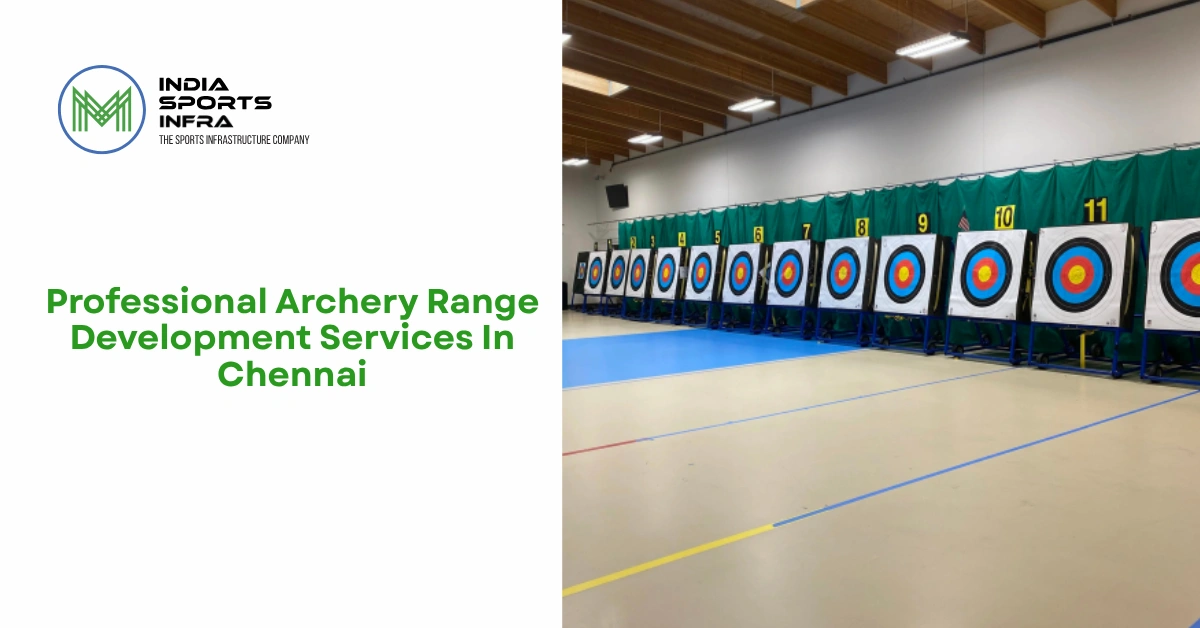
Indoor archery ranges provide a controlled setting for practice and coaching. Schools, academies, clubs, and training centres can use indoor spaces where weather conditions may otherwise interrupt regular sessions.
Outdoor archery ranges provide greater flexibility for longer shooting distances and larger layouts. The design should account for the surrounding property, access, drainage, landscaping, and safety separation.
Practice ranges can focus on coaching and regular training, while dedicated target ranges can support more structured sporting activities.
Before construction begins, the facility owner should define the expected activities and user capacity. This information helps the construction team develop a more suitable range layout.
𝐄𝐬𝐬𝐞𝐧𝐭𝐢𝐚𝐥 𝐂𝐨𝐦𝐩𝐨𝐧𝐞𝐧𝐭𝐬 𝐎𝐟 𝐀𝐧 𝐀𝐫𝐜𝐡𝐞𝐫𝐲 𝐑𝐚𝐧𝐠𝐞
A complete archery range includes several elements that work together. Depending on the project, the facility may include:
* Shooting lanes
* Shooting line
* Target positions
* Target backstop arrangements
* Safety zones
* Protective barriers or safety netting
* Controlled entry and exit points
* Equipment storage areas
* Coaching or waiting areas
* Lighting for indoor facilities
* Suitable ground preparation
* Drainage for outdoor ranges
The exact configuration should match the range purpose and local site conditions. Safety planning deserves particular attention because the surrounding areas must remain controlled while shooting activities take place.
𝐀𝐫𝐜𝐡𝐞𝐫𝐲 𝐑𝐚𝐧𝐠𝐞 𝐂𝐨𝐧𝐬𝐭𝐫𝐮𝐜𝐭𝐢𝐨𝐧 𝐏𝐫𝐨𝐜𝐞𝐬𝐬
The construction process starts with site assessment. The team reviews the available land, access, ground condition, boundaries, drainage, and proposed range dimensions.
The next stage focuses on layout planning. Shooting positions, target areas, safety zones, circulation paths, and supporting spaces should be arranged before physical construction begins.
Ground preparation follows the approved layout. The contractor can then develop the required base, surface areas, barriers, target structures, and other supporting elements.
For indoor facilities, the construction plan may also cover lighting, ventilation, wall protection, equipment storage, and access arrangements.
After installation, the completed range should receive a detailed inspection. The team can verify the layout, surface condition, safety separation, access points, and supporting infrastructure before regular use begins.
A structured installation process helps reduce site changes and unnecessary rework during the later stages of development.
𝐀𝐫𝐜𝐡𝐞𝐫𝐲 𝐑𝐚𝐧𝐠𝐞 𝐒𝐚𝐟𝐞𝐭𝐲 𝐀𝐧𝐝 𝐋𝐚𝐲𝐨𝐮𝐭 𝐏𝐥𝐚𝐧𝐧𝐢𝐧𝐠
Safety should remain central to every archery range construction project. The range must separate active shooting areas from spectators, visitors, staff, and other activities.
The layout should provide controlled access to the shooting area. Clear movement routes can help coaches and participants follow an organised training routine.
Safety netting, barriers, backstop arrangements, and target-area protection should be selected according to the range design and intended use.
Outdoor ranges also need attention to nearby roads, buildings, walkways, neighbouring properties, and other activities. Indoor facilities require suitable wall and surrounding-area protection.
The facility owner should also review applicable local rules, sporting requirements, building permissions, and safety requirements before construction. A qualified professional can help identify project-specific requirements before work begins.
𝐀𝐫𝐜𝐡𝐞𝐫𝐲 𝐑𝐚𝐧𝐠𝐞 𝐂𝐨𝐧𝐬𝐭𝐫𝐮𝐜𝐭𝐢𝐨𝐧 𝐂𝐨𝐬𝐭
Archery range construction cost depends on the size of the facility, site condition, construction requirements, range type, safety infrastructure, and supporting facilities.
An outdoor practice range may require different infrastructure from an indoor training facility. Indoor projects can include additional building work, lighting, ventilation, wall protection, and equipment storage.
The number of shooting lanes and target positions also affects the material and installation requirements. Site preparation, drainage, landscaping, access paths, barriers, and safety netting can further change the project budget.
Instead of relying on a general per-square-foot figure, request a project-specific quotation. Ask the contractor to separate the costs for site preparation, construction, flooring or surface work, safety infrastructure, installation, and supporting facilities.
A detailed scope allows the facility owner to understand what the quotation covers before construction starts.
𝐂𝐡𝐨𝐨𝐬𝐢𝐧𝐠 𝐀𝐫𝐜𝐡𝐞𝐫𝐲 𝐑𝐚𝐧𝐠𝐞 𝐁𝐮𝐢𝐥𝐝𝐞𝐫𝐬
Choosing experienced archery range builders is important because the facility combines construction, layout planning, surface preparation, and safety requirements.
Before selecting a contractor, review their experience with sports infrastructure projects and ask for information about previous work.
Consider these points:
* Experience with sports facility construction
* Understanding of range layout requirements
* Quality of construction materials
* Safety infrastructure experience
* Site preparation capabilities
* Installation methods
* Maintenance support
* Project timeline
* Warranty or after-sales support
A portfolio can help you understand the type of sports facilities handled by the contractor.
𝐌𝐚𝐢𝐧𝐭𝐞𝐧𝐚𝐧𝐜𝐞 𝐎𝐟 𝐀𝐧 𝐀𝐫𝐜𝐡𝐞𝐫𝐲 𝐑𝐚𝐧𝐠𝐞
Regular inspection helps maintain an archery range in suitable working condition. The ground surface, target areas, barriers, safety netting, access routes, and other infrastructure should receive periodic checks.
Outdoor facilities require additional attention after heavy rainfall. Drainage paths should remain clear, while landscaping should not obstruct the shooting area or access routes.
Indoor ranges need regular cleaning and inspection of walls, flooring, lighting, ventilation, and protective systems.
Damaged safety components should receive prompt attention. Facility managers can also maintain an inspection schedule based on usage frequency and the number of training sessions conducted each week.
𝐂𝐨𝐧𝐜𝐥𝐮𝐬𝐢𝐨𝐧
An effective archery range requires thoughtful planning across layout, construction, safety, surface preparation, and supporting infrastructure. The range should reflect its intended purpose, whether it serves school students, beginners, regular trainees, sports academies, or competitive archers.
The available site, shooting requirements, user capacity, safety zones, and maintenance needs should be considered before construction begins.
If you are planning an archery facility in Chennai, working with an experienced archery range construction company in Chennai can help organise the project from site assessment through installation and final finishing.